Using an Anion Gap Calculator for Acid-Base Conditions
What an Anion Gap Calculator Measures
An anion gap calculator is a helpful diagnostic tool that estimates the difference between commonly measured electrolytes in blood. The calculated anion gap helps providers judge electrolyte balance and refine the differential diagnosis of acid-base disorders, especially when evaluating metabolic acidosis.
The calculation relies mainly on sodium, chloride, and bicarbonate. These values come from standard lab values on a chemistry panel, and the result indicates the balance between measured ions and unmeasured ions or unmeasured anions in the blood. Because the body must maintain tight acid base balance, a change in the gap can signal a metabolic derangement that warrants closer evaluation.
At a basic level, the anion gap is not a direct measurement https://anion-gap-reader007.quillnesty.com/posts/what-is-the-delta-delta-ratio-and-how-to-interpret-an-anion-gap-calculator of acid. Instead, it is a screening estimate that can reveal whether extra acids or other charged particles are present. A rising gap may suggest accumulation of acids, while a low gap can point to albumin changes, lab issues, or unusual cation excess. Used correctly, the calculator supports clinical assessment and more targeted interpretation of a patient’s chemistry profile.
In most settings, the calculator draws from serum sodium, serum chloride, and serum bicarbonate to support rapid bedside reasoning. That makes it especially useful when reviewing a serum chemistry panel in the context of acidemia, alkalemia, or a suspected compensatory response.
Anion Gap Calculation Formula and How It Is Calculated
The anion gap formula is commonly written as:
Anion gap = Sodium − (Chloride + Bicarbonate)
This basic equation matches the main measured cation, sodium, with the major measured anions, chloride and bicarbonate. Some laboratories use different conventions, but this is the most familiar version and the one many clinicians use for initial review.
To use an anion gap calculator, start with the chemistry panel. Locate the sodium, chloride, and bicarbonate values. Then use the equation one step at a time:
- Record the sodium value.
- Sum the chloride and bicarbonate values together.
- Take away that sum from sodium.
- Compare the result with the lab’s reference interval.
For example, if sodium is 140, chloride is 104, and bicarbonate is 24, the gap is 140 − (104 + 24) = 12. That result is often within a typical range, though the exact reference range depends on the lab.
The calculation is helpful because it turns routine electrolyte data into a clue about hidden acids or shifted ions. In a patient with suspected acidosis, the gap may reveal whether the problem is associated with excess extra unmeasured anions or with bicarbonate loss and chloride retention. In that sense, the calculator is less about arithmetic and more about spotting clinical patterns.
Normal Anion Gap Range and Assessment
The usual range for anion gap varies by device and technique, so the most important reference is against the local local reference range. A value that appears high in one lab may be normal in another. This is why anion gap results should always be viewed in context rather than in isolation.
A elevated anion gap usually points to the presence of extra acids or other unmeasured substances that widen the gap. A reduced anion gap is less common and often reflects hypoalbuminemia, lab variation, or unusual ionic states rather than a primary acid-base problem.
Analysis depends on the entire biochemical picture. For example, a borderline result in a stable patient may not be meaningful, while the same value in someone with vomiting, altered mental status, or shock may be a critical clue. The calculator is therefore best viewed as part of broader clinical evaluation, not a stand-alone answer.
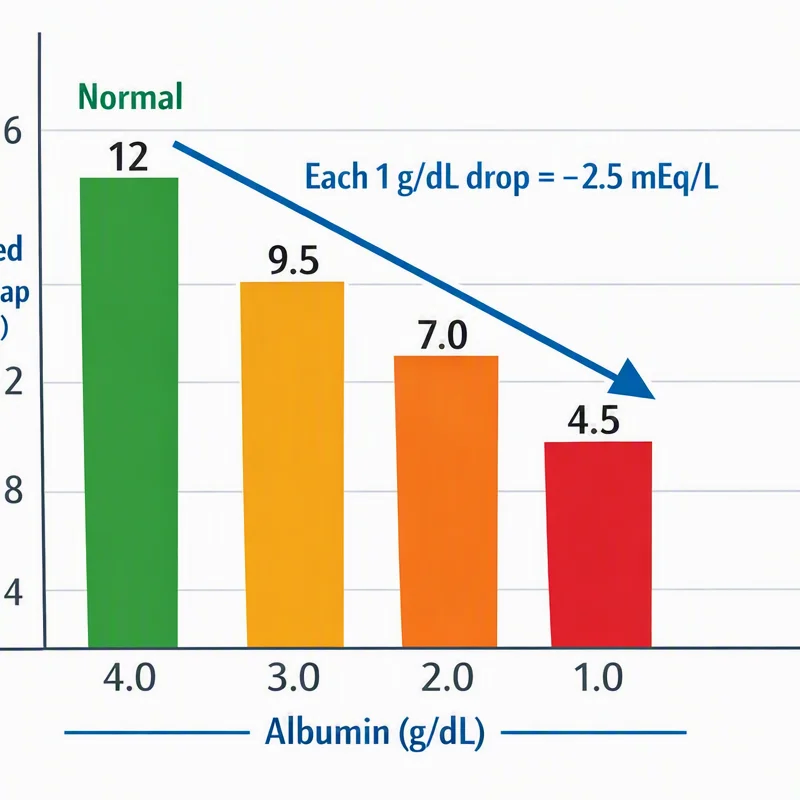
Remember that the anion gap is influenced by the concentration of negatively charged proteins, especially plasma albumin. Since albumin contributes substantial negative charge under normal conditions, a low albumin level can make the gap look falsely normal or low. That is one reason the raw number should always be read alongside the broader acid-base picture.
How the Anion Gap Helps Detect Acid-Base Disorders
The anion gap proves most helpful when evaluating acid-base disorders, particularly when the question is whether metabolic acidosis is present and what type it may be. In practice, the gap helps separate disorders caused by added acids from disorders caused by bicarbonate loss.
In high anion gap metabolic acidosis, the body collects acids that are not directly measured on the chemistry panel. These acids contribute to the gap because bicarbonate falls as it buffers excess hydrogen ions, while chloride may not rise enough to fully compensate.
In normal anion gap metabolic acidosis, bicarbonate is lost and chloride rises in a compensatory pattern. The overall gap may remain in the usual range even though the patient is clearly acidotic. This is why the anion gap calculator is so useful: it helps identify different metabolic patterns that can look similar on first inspection.
The gap can also be informative in mixed pictures involving respiratory alkalosis. For example, a patient may hyperventilate and lower carbon dioxide while also developing metabolic acidosis. In that setting, relying on one number can create a false sense of clarity. Careful analysis of pH, bicarbonate, and the anion gap helps detect a mixed disorder.
Overall, the calculator encourages a systematic approach to acid base balance. It helps clinicians move from a single abnormal lab result to a more complete interpretation of the underlying physiology.
Increased causes of high anion gap metabolic acidosis
An elevated gap suggests extra acids or retained acid equivalents. The classic causes include lactic acidosis, ketoacidosis, renal failure, and ingestion of toxic alcohols. These conditions all increase unmeasured acid in the blood and alter the biochemical profile from normal.
Lactic acidosis occurs when lactate production exceeds clearance, often in settings of tissue hypoperfusion, sepsis, severe exertion, or impaired metabolism. Because lactate is an unmeasured anion in routine chemistry, it can elevate the gap significantly.
Ketoacidosis is another major cause. It may be seen in diabetes, prolonged fasting, heavy alcohol use, or other states of carbohydrate deprivation. Ketone bodies such as beta-hydroxybutyrate and acetoacetate contribute to the rise in the gap and often accompany symptoms of dehydration, nausea, and altered mental status.
Renal failure can elevate the anion gap because the kidneys are unable to excrete acid effectively. With acid accumulation, bicarbonate decreases and unmeasured acids climb. This creates a metabolic pattern that commonly indicates advanced disease or acute decline.
Toxic alcohols like methanol and ethylene glycol can also produce a high gap. The body metabolizes these substances into acidic compounds that lead to marked metabolic disturbance. In the right setting, this pattern is a medical emergency and should prompt immediate evaluation.
Although the anion gap does not identify the exact toxin or acid, it is a powerful clue that guides further testing and treatment. That is why it is often one of the first numbers reviewed in suspected poisoning or unexplained acidemia.
Normal Anion Gap Acidosis with Normal Anion Gap Causes
A normal anion gap does not rule out acidosis. In normal anion gap metabolic acidosis, the key issue is often depletion of bicarbonate rather than retention of an added acid. The gap stays stable because chloride rises as bicarbonate falls, preserving overall electrical neutrality.
Typical causes include diarrhea, renal tubular acidosis, and other forms of bicarbonate loss. This pattern is often called hyperchloremic acidosis because chloride increases as bicarbonate decreases.
Diarrhea can cause substantial gastrointestinal bicarbonate loss, especially when prolonged or severe. The kidneys may attempt to compensate, but the chemistry panel often shows low bicarbonate and high chloride with a largely normal anion gap.
Renal tubular acidosis refers to impaired renal handling of acid or bicarbonate. Depending on the subtype, the kidneys may fail to acidify urine properly or may waste bicarbonate. Either way, the result can be persistent metabolic acidosis with a normal gap.
Other settings can mimic this pattern, including some IV fluids, chronic kidney conditions, and mixed metabolic states. This is where careful interpretation matters: a normal gap should not stop the evaluation if the patient has a clearly low bicarbonate or a clinical picture consistent with acidosis.
The practical takeaway is simple: if the chemistry panel shows metabolic acidosis but the gap is not elevated, think about bicarbonate loss, chloride retention, and causes of hyperchloremic acidosis before assuming the problem is mild or resolved.
Adjusting the Anion Gap for Albumin
Because albumin serves as a principal negatively charged protein in plasma, low albumin can conceal a true increase in the anion gap. That is why albumin correction is an important part of modern interpretation. If not corrected, a patient with significant acid accumulation may appear to have a normal result.
The corrected anion gap modifies the measured value to account for hypoalbuminemia. The exact correction factor may differ slightly by formula, but the principle is consistent: when albumin is low, add back a portion of the missing negative charge to approximate the true gap more accurately.
This matters clinically because albumin contributes to protein binding and overall charge balance. If albumin falls, the measured gap may shrink even when unmeasured acids are present. In that situation, a seemingly normal anion gap may obscure a clinically important high-gap process.
Albumin correction enhances interpretation in patients with liver disease, malnutrition, critical illness, or inflammation, where hypoalbuminemia is common. It is especially useful when evaluating possible lactic acidosis, ketoacidosis, or toxin exposure in a patient whose chemistry panel does not seem alarming at first glance.
In practice, the corrected value should be considered alongside pH, bicarbonate, and the rest of the electrolyte profile. The goal is not merely to calculate a number, but to avoid missing a serious acid-base disorder because of altered protein levels.
Frequent Errors and Limitations
Although the anion gap calculator is useful, it has limitations. One of the most common issues is lab error. A hemolyzed sample, transcription problem, or analyzer variation can distort the result. When the number does not fit the clinical picture, repeating the test is often the best first step.
Another limitation is the presence of unmeasured cations. Substances such as lithium, severe magnesium elevation, or other cation excesses can lower the gap and obscure interpretation. Some medications may also alter acid-base status directly or indirectly, making the chemistry pattern less clear.
Reading issues often happen when clinicians focus on the anion gap alone and ignore the full acid base status. The gap should be integrated with pH, bicarbonate, carbon dioxide, and the patient’s general status. In that case, a mixed disorder or compensatory change may be overlooked.
One more problem is forgetting that a “normal” reading depends on the particular lab reference range. A value may be abnormal relative to one measurement and normal in another assay. That means every value should be assessed using the lab’s own reference interval rather than an assumed universal cutoff.
In the end, the anion gap doesn’t reveal the underlying cause by itself. It is a hint, not a medical diagnosis. Proper use requires linking the number to the broader pattern of electrolyte balance, clinical findings, and likely exposures. This combination is what makes the calculator clinically useful.
Anion Gap Calculator FAQ
What is an anion gap calculator used for?
An anion gap calculator is employed to assess acid-base disorders, notably metabolic acidosis. It helps clinicians identify whether the problem is more in line with a increased-gap process such as lactic acidosis or ketoacidosis, or a normal anion gap process such as diarrhea or renal tubular acidosis. In that way, it serves clinical use as a rapid triage and review tool.
How do you calculate the anion gap from lab values?
Use the the anion gap formula: sodium subtracts the total of chloride and bicarbonate. That is, anion gap = sodium − (chloride + bicarbonate). This calculation comes straight from a serum chemistry panel and is one of the most common types of gap calculation in clinical routine.
What does a elevated anion gap mean in acid base disorders?
A high anion gap usually means there are additional unmeasured anions or hidden acids in the blood. When there is metabolic acidosis, that frequently suggests lactic acidosis, ketoacidosis, renal failure, or toxic alcohols. It is an useful clue in acid-base interpretation, but it still requires medical evaluation.
Why do you correct the anion gap for albumin?
You account for albumin because low albumin can artificially reduce the measured gap. With albumin correction, the corrected anion gap better reflects the true acid-base picture, especially in hypoalbuminemia. This prevents missing a clinically important disorder when the raw value appears normal.
What can cause a normal anion gap metabolic acidosis?
Normal anion gap metabolic acidosis is commonly caused by diarrhea, renal tubular acidosis, and other forms of bicarbonate loss. It is often described as hyperchloremic acidosis because chloride rises as bicarbonate falls. If the bicarbonate is low but the gap is not elevated, these causes should be part of the diagnostic workup.