Using an Anion Gap Calculator Using Lab Results
What the Anion Gap Reflects
The anion gap is a practical way to look at the relationship of charged particles in the blood, especially when evaluating serum electrolytes and overall acid-base balance. It is not a direct reading of a single substance. Instead, it is a calculated estimate that reflects the difference between commonly measured positive ions and negative ions in a standard chemistry panel.
An anion gap calculator uses routine lab values to estimate how many unmeasured anions may be present in the bloodstream. This makes it a useful diagnostic aid in the assessment of acid-base disorders, especially metabolic acidosis. In simple terms, if the gap is elevated or lower than expected, it can point to underlying changes in the body’s chemical balance.
The calculation is part of everyday serum chemistry and is commonly derived from an electrolyte panel. It is especially important because the result can suggest whether an acid load is present, whether there may be changes in renal function, or whether additional testing is needed to clarify the cause of an abnormal result. The anion gap is best understood as a guide, not a final diagnosis.
How to Determine the Anion Gap from Lab Results
The classic anion gap formula relies on three lab values: sodium, chloride, and bicarbonate. In most cases, the calculation is:
Anion https://anion-gap-analyzer361.lucialpiazzale.com/anion-gap-calculator-with-potassium-included gap = sodium - (chloride + bicarbonate)
This formula measures the dominant measured cation, sodium, against the major measured anions, chloride and bicarbonate. The result shows the amount of unmeasured anions in the blood. Because different laboratories may report slightly different values or use different methods, the exact interpretation should always be tied to the lab’s own reference interval.
To apply an anion gap calculator correctly, enter the values from the same blood draw. Mixing results from different times can distort the clinical interpretation. Also check whether the calculator is using the traditional formula or a version that includes potassium, since that changes the number slightly. Most routine clinical use focuses on the sodium-based version.
As an example: if sodium is 140, chloride is 104, and bicarbonate is 24, the calculation is 140 - (104 + 24) = 12. That result is often considered within a typical range, but the exact normal anion gap depends on the lab method and the reporting system.
Anion Gap Calculator Input and Output
An reliable anion gap calculator is only as reliable as the lab values input into it. The essential inputs are sodium, chloride, and bicarbonate, and the output is the calculated result. Some calculators also present the expected reference range so the user can quickly see whether the result is low, normal, or high.
Understanding the output requires more than comparing a number to a cutoff. A useful calculator should help relate the result to the broader laboratory analysis. For example, a result somewhat above the reference range may be meaningful in the context of symptoms or other abnormal chemistry findings, while a greater elevation can suggest a more significant disorder in acid-base status.
Some calculators include albumin adjustment, which is useful because a low albumin can decrease the measured gap. This is one reason the raw result should be treated as a corrected value only after assessing the patient’s protein status and other findings. Using the calculator thoughtfully helps improve clinical interpretation and reduce common mistakes.
Typical Anion Gap vs Increased Anion Gap
The usual range for the anion gap varies by laboratory, assay method, and whether potassium is part of the calculation. In broad terms, a typical anion gap indicates that the balance between measured cations and anions is stable, while a elevated anion gap implies extra unmeasured acids or anions are present.

A increased anion gap is especially important in the evaluation of metabolic acidosis. In this context, bicarbonate is often depleted as the body cushions excess acid, and the calculated gap goes up as new unmeasured substances enter in the blood. This pattern indicates a form of acid-base abnormalities that usually calls for further workup rather than simple observation.
A normal result does not always mean there is no problem. Some types of metabolic acidosis occur with a normal gap, particularly when bicarbonate is lost and chloride rises to replace it. That is why the anion gap should be used as one part of a broader serum chemistry review, not in isolation.
Typical Causes of a High Anion Gap
Various disorders can produce a high anion gap, and this pattern often reflects buildup of acids or other nonmeasured substances. Among the most common are lactic acidosis, ketoacidosis, renal failure, and exposure to certain toxins.
Lactic acidosis develops when lactate rises due to inadequate oxygen delivery, shock, severe infection, seizures, or other stress conditions. A elevated lactate level may match a higher anion gap, although the two do not always track exactly. This makes the anion gap a helpful indicator, but not a stand-in for direct testing.
Ketoacidosis occurs when ketone bodies accumulate, often in diabetes, prolonged fasting, or heavy alcohol use. In this setting, the body produces an acid load that increases the gap. The result is commonly paired with low bicarbonate and a low pH on blood gas testing.
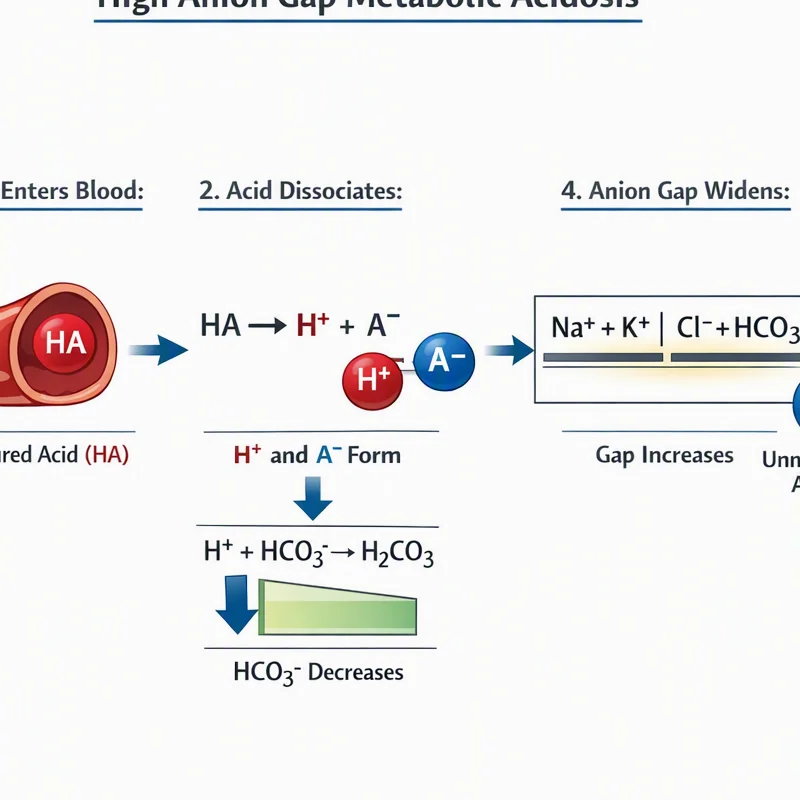
Renal failure can also cause a high gap because the kidneys are less able to clear acids and maintain electrolyte balance. As renal function declines, retained acids build up and contribute to metabolic acidosis. This is one reason the anion gap is frequently reviewed alongside kidney markers and overall chemistry findings.
Another critical category is toxin exposure. Toxic alcohols such as methanol or ethylene glycol can elevate the gap significantly. Salicylates can also cause complex acid-base changes and should be considered when the history suggests exposure or overdose. In these cases, the anion gap may be an initial alert of serious poisoning.
Common Causes of a Decreased Anion Gap
A low anion gap is less common than a high one, but it can still have clinical significance. A common cause is low albumin, since albumin is a negatively charged plasma protein that contributes substantially to the normal gap. When albumin falls, the measured gap may drop even if no new disorder is present.
Paraproteinemia is also an important cause. Some abnormal proteins, such as monoclonal immunoglobulins, can alter the charge balance in blood and reduce the apparent gap. This is why an unexpectedly low value may prompt a deeper assessment of the full chemistry profile and associated clinical picture.
Lab error should also be considered. Simple errors with specimen handling, measurement method, or reporting can create misleading results. If the number does not fit the patient’s condition or changes abruptly without explanation, repeating the test is often the best first step. In many cases, a low result is less about a dangerous disorder and more about a clue that the numbers need to be verified.
How Serum Albumin Influences an Anion Gap
Albumin acts as one of the main unmeasured anions in the blood, so changes in its level can strongly affect the anion gap. When albumin is low, the gap may appear artificially reduced. This is why the corrected anion gap is often applied in people with low albumin, especially when assessing metabolic acidosis or other acid-base disorders.
The approach of albumin correction adjusts the result upward to account for missing negative charge from low protein levels. This creates a more accurate corrected value and improves the utility of the test as a diagnostic aid. Without correction, a clinically important high gap can be missed if hypoalbuminemia is present.
Because albumin is a major circulating protein, any condition that depletes it can change the apparent balance of electrolytes. This means the raw number and the corrected number may suggest different stories. A thoughtful interpretation should always consider the patient’s protein status, overall acid-base status, and the broader laboratory context.
Using the Anion Gap with Other Lab Findings
This value becomes much more useful when considered with a blood gas, especially the pH and related measures such as base excess. Together, these results can confirm whether the body is acidemic, alkalemic, or compensating for a mixed disorder. This integrated approach improves clinical interpretation and gives a more complete picture of acid-base status.
In practice, a high anion gap with low pH and low bicarbonate strongly supports metabolic acidosis. If the blood gas shows an unexpectedly normal pH, there can be compensation or a mixed disorder obscuring the main process. The value of the anion gap is that it helps identify whether excess acids are present even before the pH fully reflects the problem.
Base excess adds another layer of information by estimating the amount of base needed to return blood to normal pH. When paired with the anion gap, it can help distinguish between acute and chronic processes and clarify whether the body is dealing with an acid load. Reviewing all of these numbers together is far more informative than relying on a single value.
If to Seek Medical Interpretation
An abnormal anion gap should be reviewed with a clinician when it is associated with symptoms, severe illness, or other abnormal lab findings. The result is most useful when interpreted in context, especially if there are signs of dehydration, confusion, shortness of breath, vomiting, abdominal pain, or altered mental status. These symptoms may signal a serious acid-base problem.
Clinician review is especially important when the value is markedly high or low, when there are critical values on the chemistry panel, or when the pattern suggests toxin exposure, severe renal function impairment, or an uncontrolled metabolic disorder. A calculator can support decision-making, but it cannot replace medical judgment or a full history and exam.
It is also wise to seek interpretation if the result doesn’t align with the overall picture, because lab error, collection problems, or overlooked albumin changes can alter the outcome. A better approach is to use the anion gap as part of a broader review of the patient’s condition, not as a stand-alone diagnosis.
Frequently Asked Questions
What is an anion gap calculator used for?
An anion gap calculator is used to determine the anion gap from routine lab results, usually sodium, chloride, and bicarbonate. It helps with interpretation of electrolyte findings, especially when evaluating metabolic acidosis and other acid-base disorders. It is a helpful resource for reviewing serum electrolytes and identifying potential unmeasured acids.
How do you calculate anion gap from lab results?
The usual anion gap formula is sodium minus the sum of chloride and bicarbonate: sodium - (chloride + bicarbonate). Enter the values from the same sample into the anion gap calculator to get the result. Always compare the number to the lab’s reference range, since the expected interval can change by method and reporting system.
What does a high anion gap mean?
A high anion gap often means there are extra unmeasured anions in the blood, usually from an acid buildup. Common causes include lactic acidosis, ketoacidosis, renal failure, toxic alcohols, and salicylates. It is a important clue in the evaluation of metabolic acidosis, but it should be interpreted with blood gas findings and the clinical picture.
Can a low albumin level change the anion gap?
Yes. Hypoalbuminemia can lower the measured gap because albumin is an important negatively charged protein. In that situation, a corrected anion gap may be more reliable than the raw number. This albumin correction helps avoid missing a clinically important acid-base problem.
How should I respond if my anion gap is abnormal?
If your anion gap is abnormal, the following step is usually clinician review of the full set of laboratory values, signs, and related tests such as a blood gas. The meaning depends on whether the result is high, low, or affected by laboratory error, albumin changes, or another condition. Seek prompt medical attention if you have concerning symptoms or if the result is marked as a critical value.